
Some Tips for Collecting and Investing in Historic Arms. What trips your trigger?
A Guide of where to start.

Are you thinking about starting to collect historic weapons? Wondering where to start? There are several factors to consider before you begin.
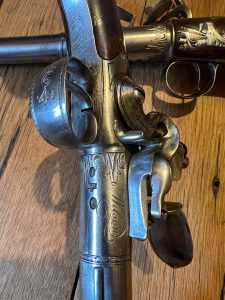
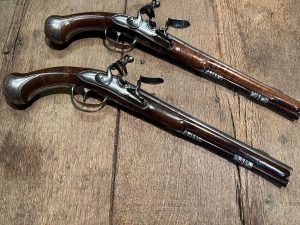
First, decide on specifically what you would like to collect. A gentleman came to me recently and asked what he should buy or collect. I told him that he should buy what HE likes. I told him to look at some different categories of items and handle them. After doing this and possibly a little research, you will come up with an answer. Some people decide what to collect because they were told to collect that category of arms or because they know someone who did. You should always reflect on what YOU truly like and what interests you. You will not be able to truly enjoy your collection if you don’t decide for yourself. Begin by deciding what period of history interests you. Revolutionary War? French and Indian War? Or maybe Civil War? Then, decide what type of items interest you the most: books and manuscripts, uniforms and accessories, edged weapons, powder horn, pistols, muskets, etc. Then, handle some authentic examples to get a feel for them, compare conditions and patinas and examine their details.
Once you have decided what you are interested in buying, now it’s time to decide your budget. I always suggest that no matter what your budget is, you should buy the best that your budget will allow. There are “bests” in some categories of collecting that could be supported with a minimal budget. Other categories will require a very large budget in order to acquire the “best” of that category. In general, lower end, common and mid-range items do not hold their value to the extent of the better items. The better items may have greater rarity, better condition, excellent provenance or important historical associations. When it comes time to sell, the better items are always easy to deaccession.
In addition to your budget, find a couple mentors or other notable collectors to help guide you to the right sources, the right items and the right reference books. Knowing what you are buying is extremely important. There are plenty of fakes and forgeries on the market. Buy from establishments and dealers who will guarantee the items to be as described and to be authentic and will put it in writing. When considering doing business with someone, ask for references or get a few opinions from trustworthy others in the business or collecting field.

Revolutionary War American Lion Pommel Horseman’s Saber
Next, consider the factors that impact an item’s value. The most important is probably condition. There is no shortage of examples in some categories of collecting. The items that stand out are those that have survived in excellent condition. These items are much harder to find and will cost a premium. However, they will also retain their value or appreciate, while lesser items will do neither. Other important things to consider are the workmanship or art. Is the item appealing in terms of its overall quality or artistry? If so, this opens the item up to a broader audience to appreciate it. This again often leads to a higher value, as it has a greater demand. Historical association is another important factor to consider. Some aspects of this would be: Was it used in specific battle? Is it marked with a regiment, individuals name or was it made by a rare or important maker? If so, these factors can make an item worth multiple that of a comparable example without these attributes. If the item has traceable and verifiable provenance of who owned it, how it got to you is known or if it was owned as part of an important collection. Is the item is shown in a book? These factors can also add value and importance.
Whatever you decide to collect, may it lead to a better understanding of the past and our history. Whether you are collecting for art, history or as an investment, it important to know where to start. Research, collecting and sharing will bring much enjoyment to you for a lifetime. Collectors share through going to gatherings, historic arms shows or conventions. In addition, most collectors love sharing their own collections with other trusted collectors. Collecting things that you enjoy is very rewarding and fulfilling pastime. Enjoy!
